Targeted repair
Correct compatible membrane, seam, curb or flashing failures where the surrounding assembly is serviceable.
Flat roof repair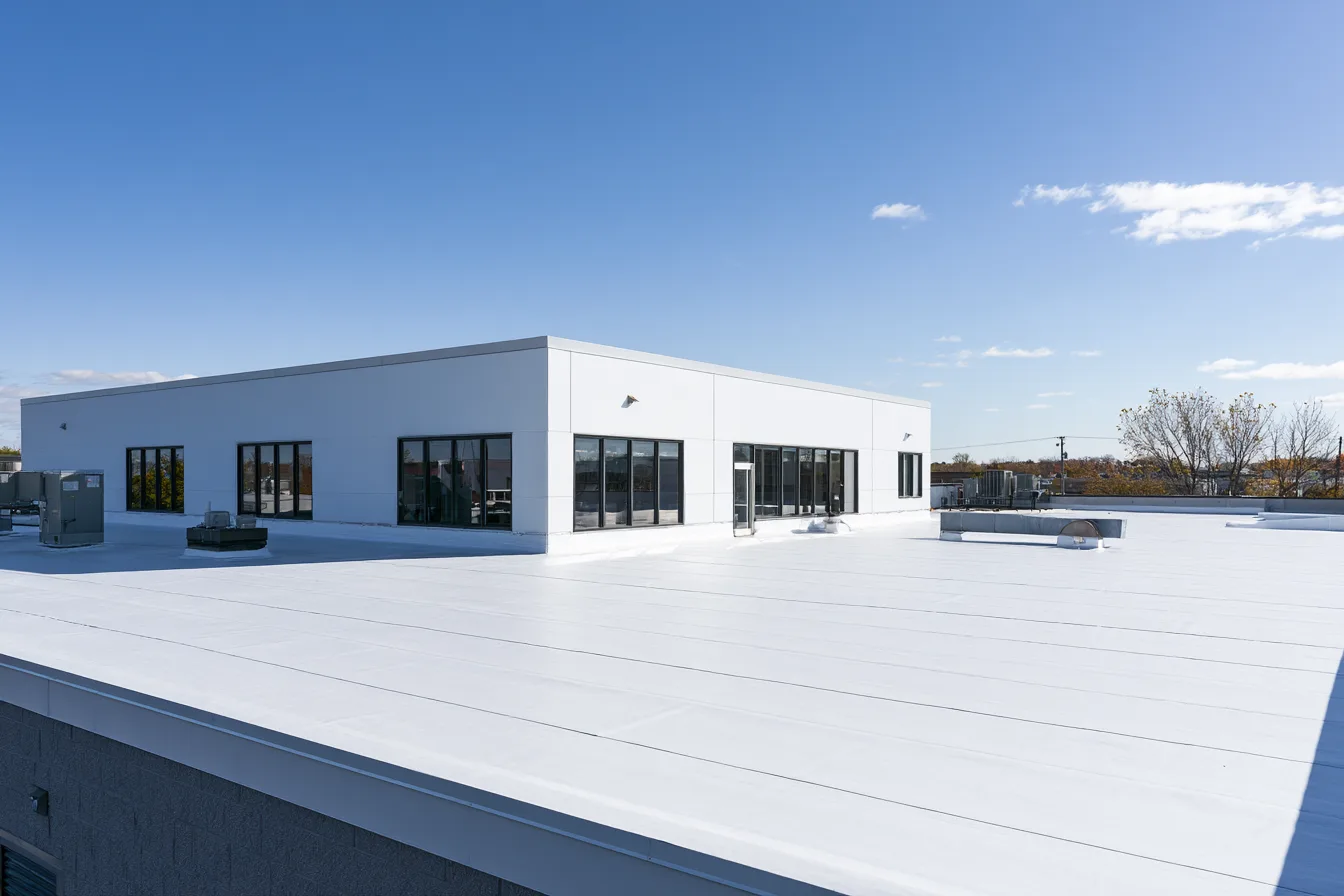
Spencer, OK
A commercial roof plan needs to keep water out and account for the building below. Discuss repair, restoration and replacement for your Spencer property.
A leak over a work area can begin at a seam, curb, drain or penetration farther away. A low-slope assessment considers the membrane and the layers beneath it, including whether moisture has spread through insulation. The answer determines whether a repair has a sound place to tie in.
Building use matters too. Tenant entrances, receiving areas, rooftop equipment and sensitive interior work affect access and sequencing. A useful scope connects the roofing system to those operating needs instead of treating an occupied building as an empty shell.
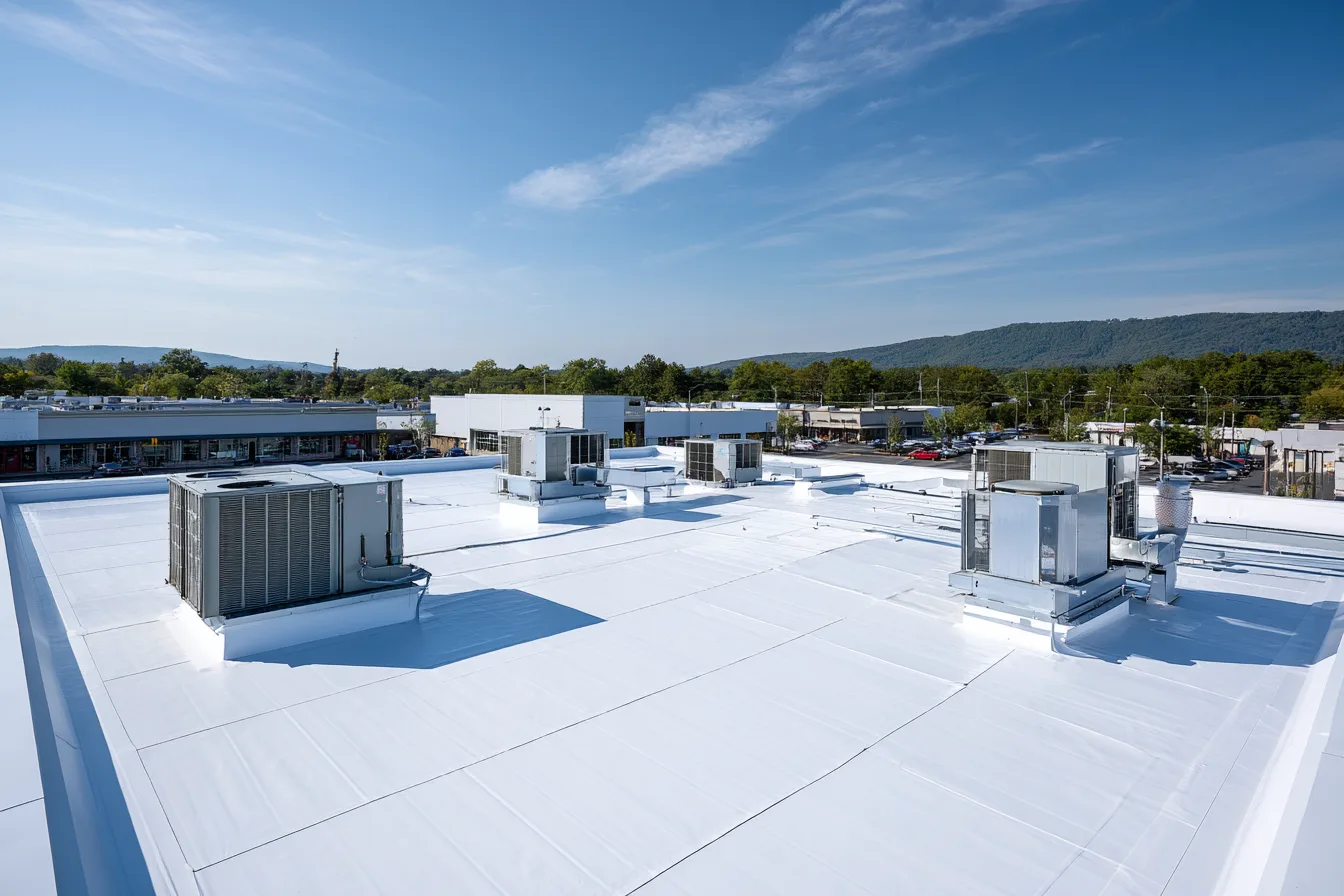
Repair, restoration and replacement are different tools. Choose from the condition of the actual roof.
Correct compatible membrane, seam, curb or flashing failures where the surrounding assembly is serviceable.
Flat roof repairConsider welded seams, attachment, perimeter edges and insulation as a coordinated system.
TPO roofingEvaluate surface compatibility, adhesion and moisture before restoring a suitable roof.
Roof coating optionsRenew the system when underlying condition or broader deterioration prevents a reliable repair or restoration.
Flat roof replacementUse compatible membrane repairs and joining materials around seams, curbs and drains.
EPDM roof workAssess reinforced asphalt sheets, laps and flashing with the moisture condition below them.
Modified bitumen roof workThe visible roof surface is part of the assessment, not the whole assembly.
Check how the field membrane connects at curbs, vents, drains and rooftop equipment. Movement and mismatched repair material can leave these connections vulnerable.
Wet insulation and deteriorated support change the repair boundary. The assessment needed to establish those conditions is determined by the building and proposed work.
Consider ponding areas, drains, scuppers and edge details together. Replacing a surface without resolving the cause of retained water leaves a separate problem.
A useful commercial proposal connects the physical work to how the property operates.
A useful roofing estimate
Existing assembly, removal or recovery, insulation, attachment and edge/penetration details.
Access, staging, tenant routes, equipment service and protecting the occupied areas under the work.
Treatment of hidden moisture or deck damage, separately coordinated trades and the actual product or contractor coverage.
Scope, materials and terms belong together in the proposal.
Roof area alone does not price a commercial project. The existing system and the operating plan can change the work substantially.
Removal depth, insulation, attachment and damaged substrate affect the scope. Coating an unsuitable roof does not avoid those costs.
Curbs, drains, equipment, edge length and staging shape labor. Occupied areas and interior protection can require phased work.
Yes, when the defect is localized and compatible repair material can tie into a sound existing assembly. Broad wet insulation, deteriorated support or repeated widespread failures change the options.
No. A suitable coating needs a compatible, prepared and sound substrate. Failed details need repair, and wet insulation or inadequate drainage require their own solution.
The roofing scope considers entrances, equipment, staging and sensitive operations. Actual sequencing and availability are established with the contractor for the building.
Spencer Roofers
Tell us the property location, the current concern and the way the building is used. Start the commercial roofing conversation in Spencer.
(405) 925-2090